
Table of Contents
- Introduction: Why Egwa Film Tribal Drama Demands Attention
- The Mythos of Egwa: More Than Just a Tree
- What Does “Egwa” Mean?
- Cultural Roots and Tribal Belief Systems
- The Director’s Vision: V.K. Raju Director on Realism
- Akulu’s Journey: A Tribal Man in the Concrete Jungle
- Understanding the Akulu Character
- Innocence vs. Chaos: Humor Meets Pain
- A Masterclass in Indie Cinema: Our Egwa Movie Review
- Performances and Casting Choices
- Visual Language and Sound Design
- Awards, Recognition, and Global Acclaim
- Why Egwa Belongs Among the Best Indian Tribal Films
- How It Differs from Conventional Tribal Narratives
- Environment, Identity, and Modern Conflict
- Behind the Lens: The Visionary Craft of V.K. Raju Director
- Storytelling Without Preaching
- Working with Real Communities
- Symbolism, Themes, and Emotional Resonance
- Final Verdict: Why Egwa Is a Must-Watch Tribal Drama
Introduction: Why Egwa Film Tribal Drama Demands Attention
In an era dominated by spectacle-driven cinema, Egwa Film Tribal Drama arrives like a quiet storm—deeply rooted, emotionally stirring, and profoundly relevant. At its heart is Akulu, a tribal man entrusted with a seemingly impossible mission: to save his sacred tree, Egwa, by navigating an alien urban world that neither understands his values nor respects his belief system.
This is not just another social drama. Egwa Film Tribal Drama is a powerful blend of humor, emotion, and cultural authenticity, told with rare sensitivity. It stands as a reminder that cinema can still move us without shouting—by listening instead.
For audiences interested in meaningful storytelling, independent cinema, and culturally grounded narratives, Egwa is not just a film to watch—it is a film to feel.
The Mythos of Egwa: More Than Just a Tree
What Does “Egwa” Mean?
In the world of the film, Egwa is not merely a tree—it is memory, ancestry, and survival. For Akulu’s tribe, the Egwa tree is sacred, believed to be a living witness to generations of joy, grief, and tradition.
Unlike symbolic objects in many films, Egwa is treated as a character in itself. Its presence shapes decisions, conflicts, and emotional stakes throughout Egwa Film Tribal Drama.
Cultural Roots and Tribal Belief Systems
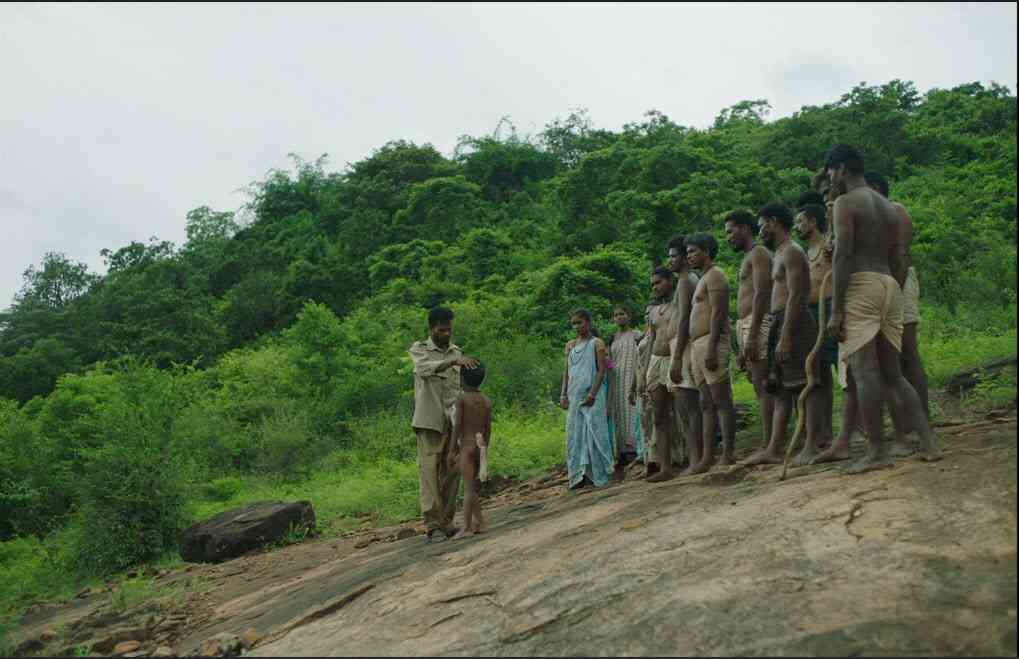
One of the film’s greatest strengths lies in its respect for tribal culture. Rituals, songs, body language, and silence are all given narrative importance. The film avoids exoticism and instead presents tribal life with dignity and realism.
This authenticity elevates Egwa Film Tribal Drama beyond fiction, placing it closer to lived experience. It is here that the film begins to resonate with viewers far beyond its geographical setting.
The Director’s Vision: V.K. Raju Director on Realism
Director V.K. Raju has spoken about his intent to make a film that observes rather than instructs. His approach is grounded in realism—long takes, minimal background score, and performances that feel unpolished in the best way.
This philosophy is evident in every frame. V.K. Raju Director allows the audience to interpret, empathize, and reflect, making Egwa a participatory cinematic experience.
Akulu’s Journey: A Tribal Man in the Concrete Jungle
At the emotional core of Egwa Film Tribal Drama lies the unforgettable Akulu Character—a man whose simplicity becomes his strength and vulnerability.
Akulu’s journey from forest to city is not framed as a heroic conquest but as a deeply human struggle. The city is loud, indifferent, and often cruel, yet Akulu navigates it with a childlike honesty that disarms even those who mock him.
Understanding the Akulu Character
Akulu is not educated in the conventional sense, yet he possesses a moral clarity that many urban characters lack. He does not understand money, contracts, or bureaucracy—but he understands responsibility.
The Akulu Character represents countless marginalized voices forced to engage with systems never designed for them. His confusion becomes our critique.
Innocence vs. Chaos: Humor Meets Pain
One of the most surprising aspects of Egwa Film Tribal Drama is its use of humor. Akulu’s misunderstandings often lead to comedic moments, but the laughter is never cruel.
Instead, humor becomes a coping mechanism—both for Akulu and for the audience. It softens the blow of the film’s heavier truths, making them more accessible and, paradoxically, more powerful.
A Masterclass in Indie Cinema: Our Egwa Movie Review
From a critical standpoint, this Egwa Movie Review must begin with appreciation for its craft. The film is made on a modest scale, yet every technical choice feels intentional.
Performances and Casting Choices
Many roles are played by members of real tribal communities, lending the film an unmatched authenticity. Their performances are untrained but emotionally honest, grounding Egwa Film Tribal Drama in reality.
Akulu’s portrayal, in particular, is quietly devastating—never melodramatic, never exaggerated.
[Internal Link: Cast Details]
Visual Language and Sound Design
The contrast between forest and city is conveyed visually through color palettes and camera movement. The forest is fluid and warm; the city is rigid and cold.
Sound design is used sparingly. Silence often speaks louder than dialogue, reinforcing the emotional isolation of the Akulu Character.
Awards, Recognition, and Global Acclaim
Egwa has garnered recognition at numerous international film festivals, earning awards for storytelling, direction, and cultural representation.
This global appreciation confirms that Egwa Film Tribal Drama speaks a universal language—one of displacement, resilience, and hope.
Why Egwa Belongs Among the Best Indian Tribal Films
Indian cinema has seen notable tribal narratives, but Egwa Film Tribal Drama distinguishes itself through its refusal to romanticize or victimize its subjects.
How It Differs from Conventional Tribal Narratives
Unlike many films that frame tribal communities solely as victims, Egwa presents them as agents of belief and resistance. The conflict is not just external (tree vs. corporation) but internal (values vs. survival).
This layered approach places Egwa firmly among the Best Indian Tribal Films of recent times.
Environment, Identity, and Modern Conflict
At its core, the film asks uncomfortable questions:
- What is development, and who defines it?
- Can tradition coexist with modernity?
- What is lost when progress is measured only in profit?
These questions linger long after the credits roll, making Egwa Film Tribal Drama intellectually engaging as well as emotionally resonant.
Behind the Lens: The Visionary Craft of V.K. Raju Director
The success of Egwa owes much to the restraint and clarity of V.K. Raju Director. His filmmaking avoids spectacle, trusting the story and characters to carry weight.
Storytelling Without Preaching
There are no villainous monologues or forced messages. Instead, meaning emerges organically through action and consequence.
This subtlety is rare and refreshing, reinforcing V.K. Raju Director’s reputation as a thoughtful voice in independent Indian cinema.
Working with Real Communities
Raju’s decision to collaborate closely with tribal communities ensured cultural accuracy and ethical representation. This collaborative process is evident in the film’s authenticity and emotional truth.
[Internal Link: Director Interview]
Symbolism, Themes, and Emotional Resonance
Beyond its narrative, Egwa Film Tribal Drama is rich in symbolism:
- The Tree (Egwa): Memory, continuity, and resistance
- The City: Alienation and moral confusion
- The Journey: Loss of innocence and growth
These elements combine to create a film that operates on both emotional and philosophical levels.
Final Verdict: Why Egwa Is a Must-Watch Tribal Drama
To conclude this Egwa Movie Review, it is clear that Egwa is not designed for passive consumption. It demands empathy, patience, and reflection.
For viewers seeking:
- Authentic cultural narratives
- Thought-provoking social themes
- Performances rooted in truth
Egwa Film Tribal Drama stands as an essential watch.
As one of the Best Indian Tribal Films in recent years, and a defining work from V.K. Raju Director, Egwa proves that cinema still has the power to protect what matters—stories, cultures, and the fragile bond between humans and nature.
👉 Watch Egwa. Share its story. Let the roots run deep.